Bridging Policy, Practice and Research: National Seminar on Ageing 2025
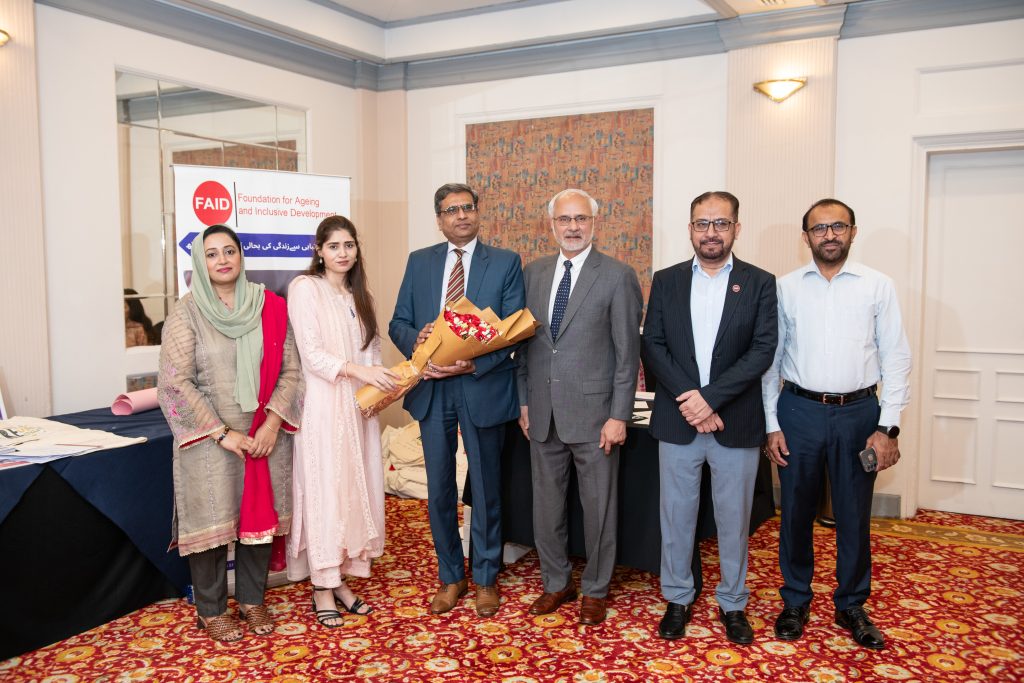
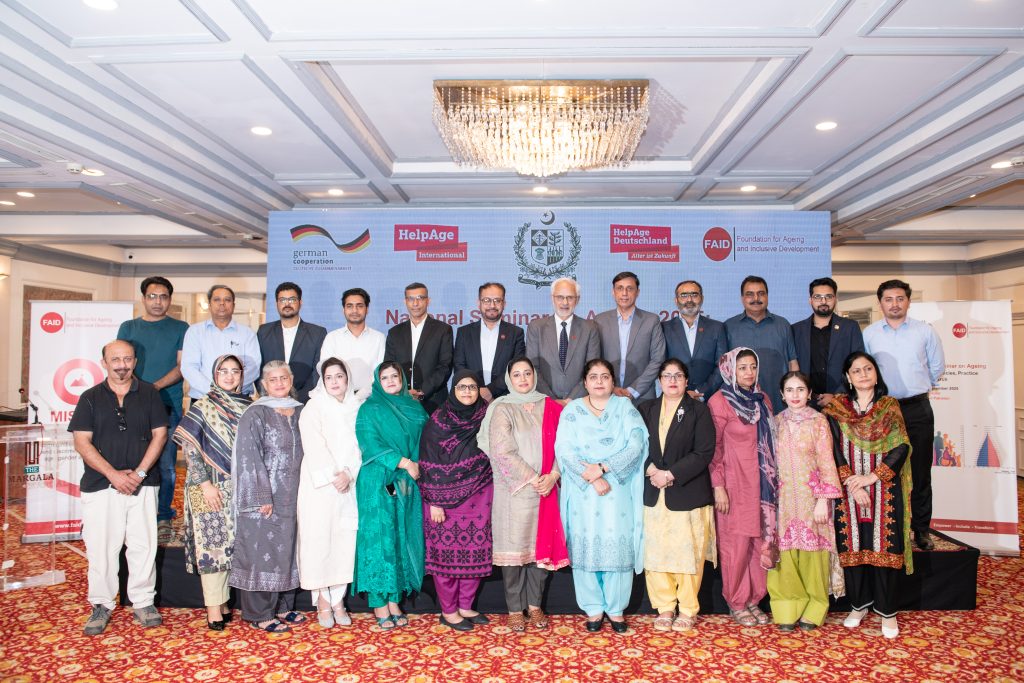
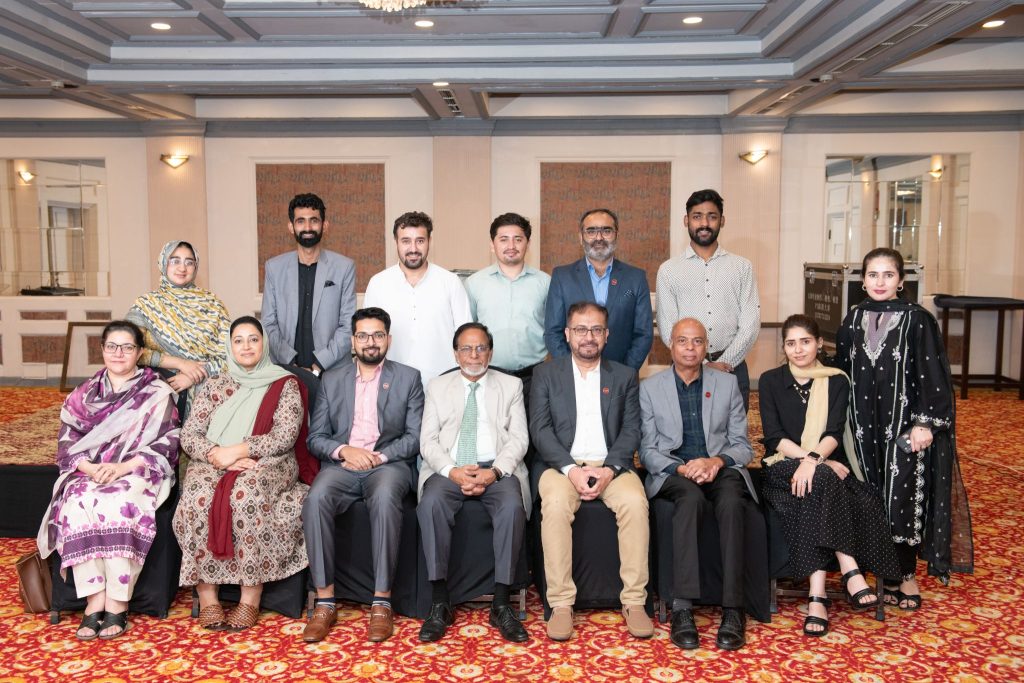
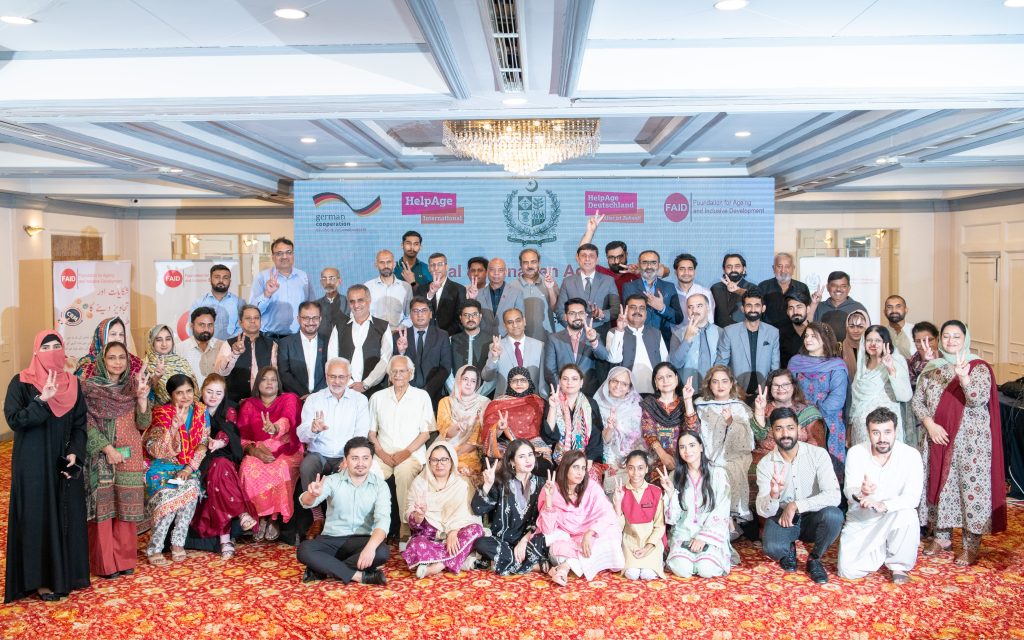
The Foundation for Ageing and Inclusive Development (FAID), in collaboration with the Ministry of Human Rights (MoHR), convened the National Seminar on Ageing 2025 in Islamabad on 16–17 September. Themed “Bridging Policy, Practice, and Research”, This flagship annual event, now in its third year, brought together more than 70 esteemed participants, including policymakers, academics, researchers, development partners, civil society representatives, and older people themselves to address Pakistan’s rapidly evolving demographic landscape.
A Growing Urgency: Pakistan’s Demographic Reality
The seminar opened against the backdrop of compelling new data: Pakistan currently has 13.5 million people aged 60 and above (5.6% of the population), but this number is projected to nearly triple to 36 million by 2050 (9.9% of the population). What makes this transition particularly striking is its speed. Pakistan will age faster than most Western countries, requiring only 31 years for its older population to double from 7% to 14%, compared to 115 years for France.
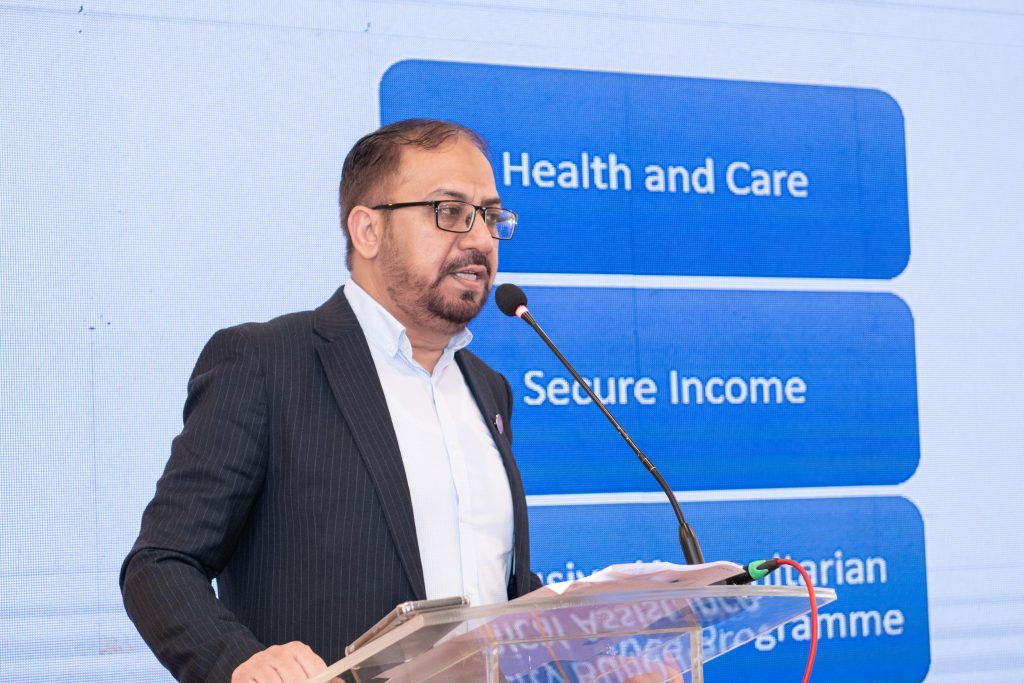
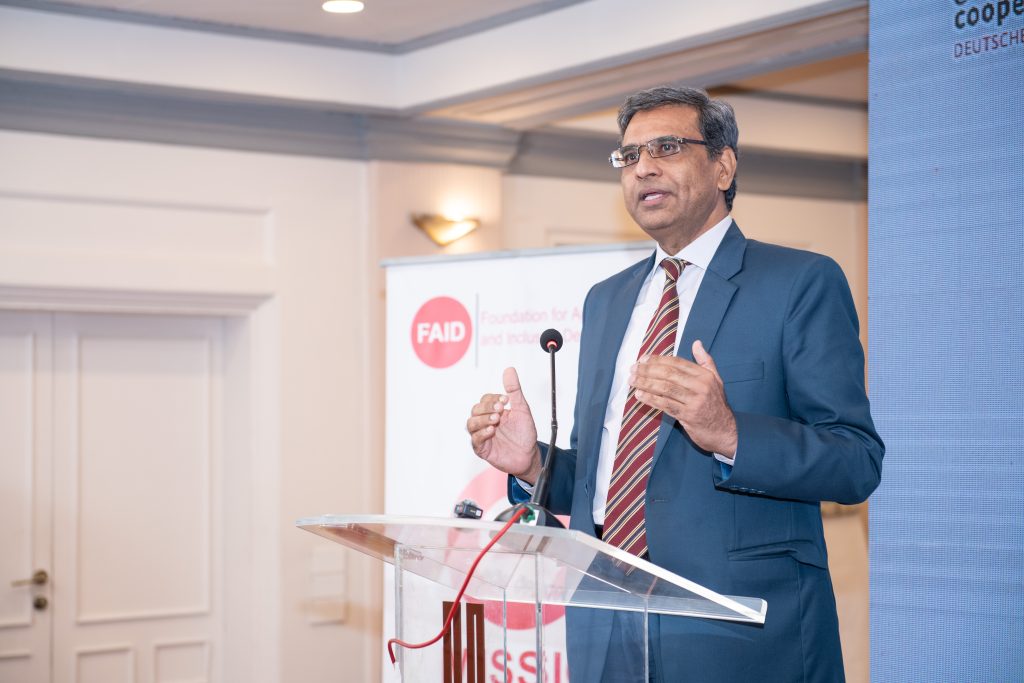
Yet the statistics reveal a sobering reality: only 5.8% of older persons have any form of social protection coverage, and 91.1% work in the informal sector with virtually no safety net. As Syed Moeez Kakakhel, CEO of FAID, emphasized in his opening remarks, this demographic shift demands urgent, coordinated action across policy, practice, and research.
Representing the Government of Pakistan, Muhammad Arshad, Director General (International Cooperation), MoHR, underlined the state’s responsibility: “The ICT Senior Citizens Act 2021 gives us a framework, but our commitment goes beyond law—it is about ensuring that older people live with respect and security, in line with Pakistan’s constitutional and international obligations.”
Launching Pakistan's Most Comprehensive Ageing Report
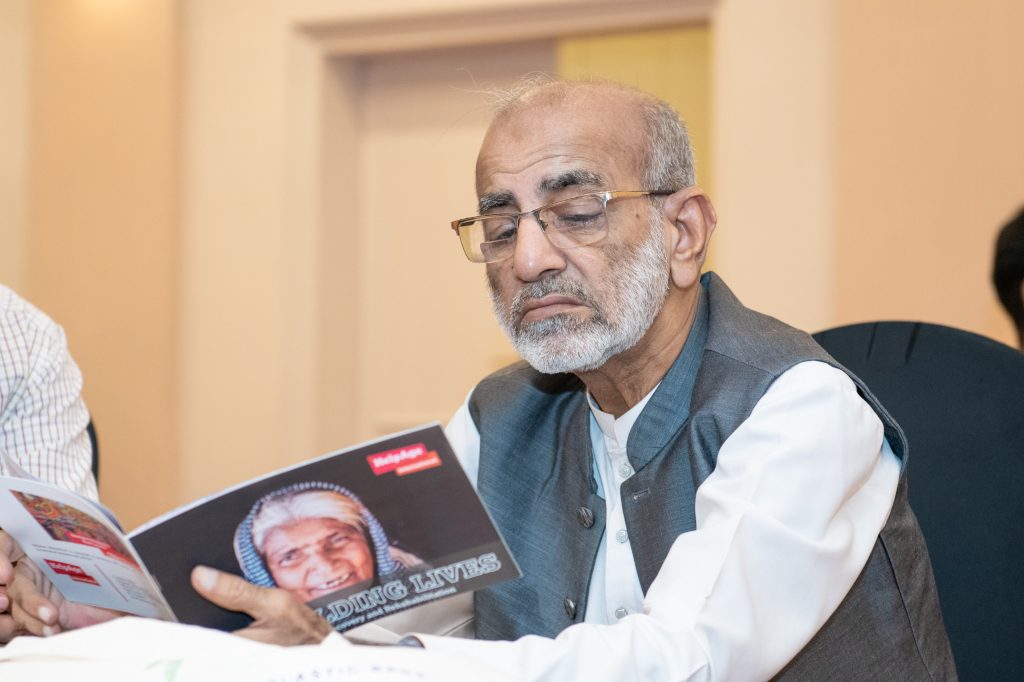
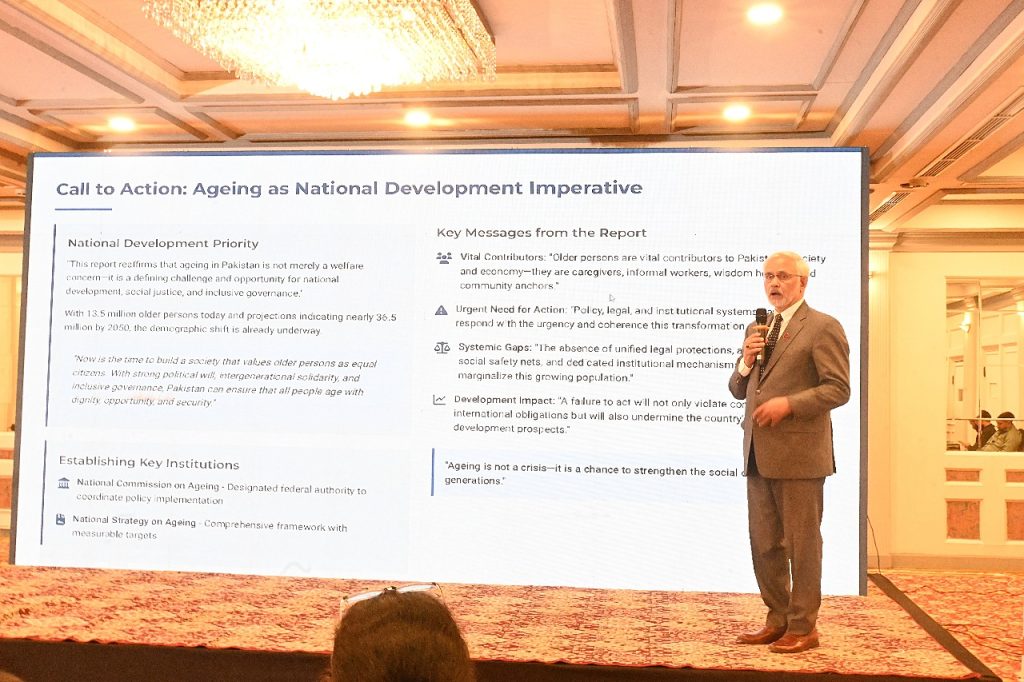
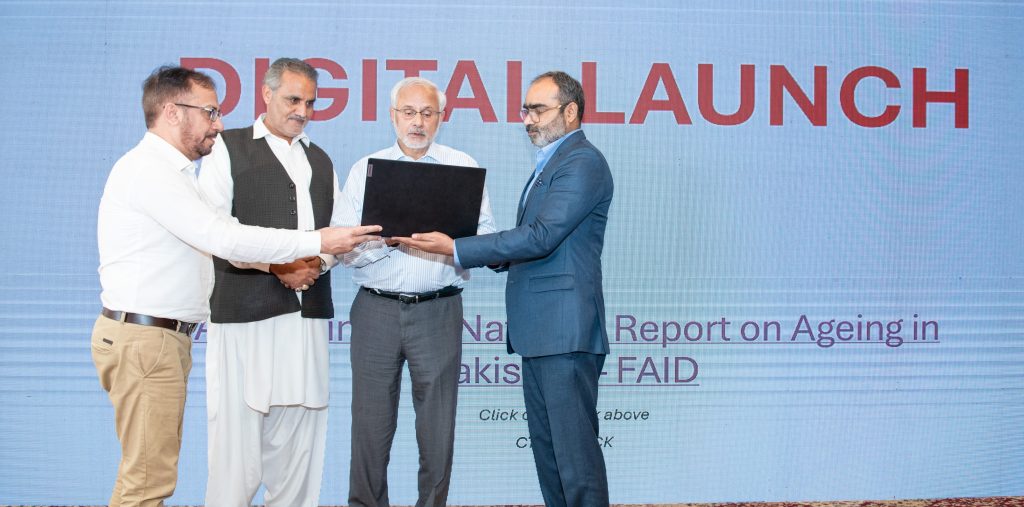
The seminar’s centerpiece was the launch of “Towards Inclusive Ageing: A Review of Laws, Demography and Social Protection in Pakistan” by Prof. Dr. Asghar Zaidi and Waqar ul Hassan. This landmark report provides the most comprehensive analysis to date of Pakistan’s ageing landscape.
Dr. Zaidi’s research revealed critical findings about family support systems that many assumed were stable. While 82.5% of older people live in extended families (up from 58.3% in 1973), the report warns that demographic transitions—including declining fertility rates, youth migration, and rising life expectancy—are fundamentally changing traditional care arrangements. “Families remain the primary support for older persons in Pakistan, providing financial care and physical assistance,” the report notes, “but these support systems are under increasing strain.”
The research also highlighted stark inequalities: 26% of older people (3.19 million) live with disabilities, yet assistive services remain virtually non-existent. Perhaps most concerning, only 2.3% of older women receive pensions compared to 16% of older men, creating what Dr. Zaidi termed a “catastrophic protection gap.”
Provincial Perspectives: Diverse Challenges, Innovative Solutions
The seminar showcased cutting-edge research from across Pakistan’s provinces, revealing both the diversity of ageing experiences and promising solutions emerging from academic institutions.
Dr. Sajeela Rabbani from Iqra University presented groundbreaking research on reverse mentoring, where younger employees mentor older colleagues on technology adoption. Her study of 148 participants aged 45+ found that this intergenerational approach significantly improved older workers’ comfort with Learning Management Systems. “Reverse mentoring challenges hierarchical norms by positioning younger staff as digital knowledge providers, thereby promoting inclusivity and cultural change,” Dr. Rabbani explained.
Click here to download the Research Paper
From Balochistan, Dr. Rukhshanda Zarar presented sobering findings on the double discrimination faced by older women. Her research in Quetta revealed that cultural expectations of lifelong caregiving intensify discrimination in old age, with widowed, uneducated, and rural-origin women facing the greatest challenges. Despite the Balochistan Senior Citizens Act (2017), implementation remains severely limited.
Click here to download the presentation
Dr. Aneela Sultana from Quaid-i-Azam University emphasized the intersection of gender and ageing: “A society that respects its elderly women secures its future.” Her fieldwork revealed how older women experience not just economic vulnerability but also social invisibility, with their voices increasingly marginalized in family and community decisions.
Click here to download the presentation
The climate dimension emerged powerfully through Dr. Muhammad Mumtaz’s presentation. In his presentation he mentioned that Pakistan’s 2022 floods affected 71.4% of elderly people with illness or disability, while air pollution reduces life expectancy by 3.9 years nationally up to 7 years in Lahore. “Climate change is a risk multiplier for older people,” he warned, calling for urgent age-inclusive climate policies.
Click here to download the presentation
Dr. Ali Abbas stressed the socioeconomic rights of older people: “Ensuring dignity and equality for older citizens is not charity, it is a constitutional obligation.”
Click here to downloaod the presentation
Dr. Uzma Ashiq spoke on intergenerational initiatives to bridge age divides.
Dr. Samina Vertejee highlighted pathways for healthy ageing.
Dr. Jameel Chitrali shared insights on social protection for older people.
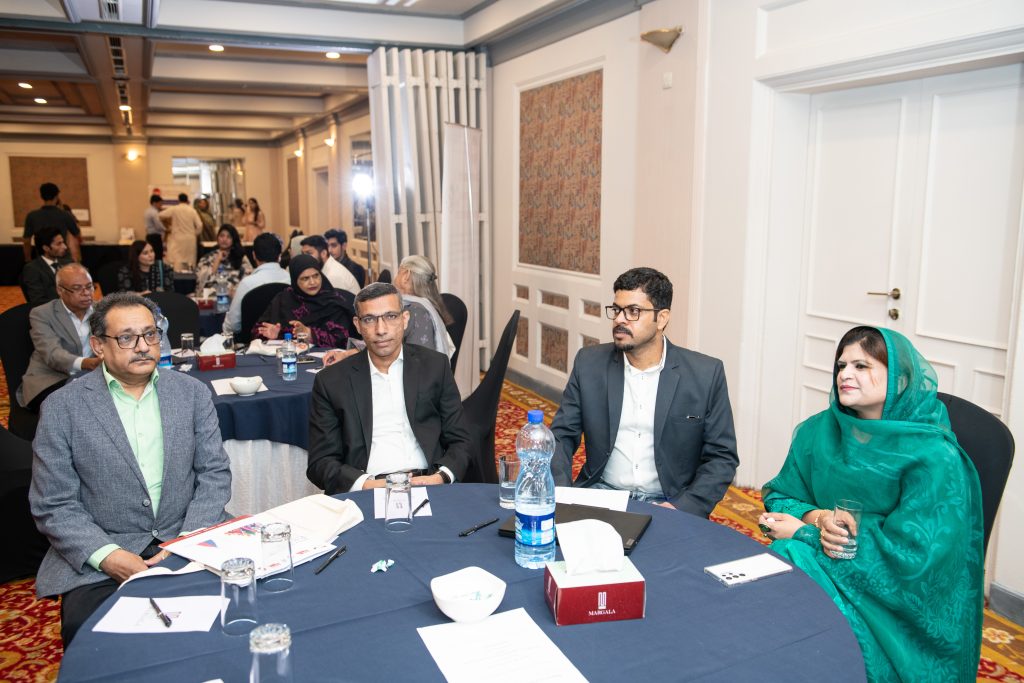
The sessions were followed by a roundtable dialogue between researchers and policymakers, which identified priority areas for evidence-based policymaking and set directions for faster implementation of senior citizens’ laws across provinces.
Revolutionary Digital Platform Launched
A major highlight was FAID’s unveiling of the Digital Resource Library (CARES) – a groundbreaking online knowledge hub dedicated to ageing research and policy integration. As CEO Syed Moeez explained:
“CARES – the Centre for Ageing Research, Education and Services – will serve as a national online resource where everyone can contribute and everyone can learn. With ageing and inclusion data often scattered and difficult to access, this initiative is a step towards bridging that gap and ensuring knowledge is available to all.”
This platform represents a paradigm shift from fragmented information to centralized, accessible knowledge sharing—exactly what Pakistan’s ageing sector needs as it scales up research and policy integration.
Government Commitment: From Policy to Implementation
Muhammad Arshad, Director General (International Cooperation), MoHR, served as Chief Guest and reaffirmed the government’s commitment to accelerating implementation of the ICT Senior Citizens Act 2021. The seminar highlighted both progress and persistent gaps: while all provinces now have senior citizens legislation, implementation remains fragmented and under-resourced.
The discussions revealed specific challenges: the absence of functional welfare councils in most provinces, inadequate budget allocations, and lack of dedicated ombudsperson mechanisms. Yet there was also recognition of promising practices—Punjab’s Ba Himmat Buzurg program reaching 35,000 elderly residents, Sindh’s relaunched Azadi Card targeting 3.7 million seniors, and KP’s innovative intergenerational centers.
Research-Policy Integration: Building Bridges
The seminar’s second day focused intensively on strengthening the research-policy nexus. The interactive roundtable brought together researchers and policymakers to identify priority research areas and develop concrete collaboration models.
Participants agreed on urgent research needs: age-disaggregated data collection, evaluation of existing social protection programs, rural-urban disparities in ageing experiences, and the impact of climate change on older populations. Dr. Ali Abbas from the National School of Public Policy emphasized that “transforming ageing from a challenge into an opportunity requires evidence-based, rights-centered approaches.”
A National Framework Takes Shape
The seminar concluded with strong commitments from both FAID and the Ministry of Human Rights to develop a National Ageing Framework, a comprehensive policy roadmap that would coordinate federal and provincial efforts while setting minimum standards for older people’s rights and services.
Key priorities identified include:
- Faster implementation of senior citizens’ laws across all provinces
- Research partnerships with universities to support evidence-based policymaking
- Expansion of FAID’s Digital Resource Library and knowledge resources
- Cross-sector partnerships for ageing and inclusion
- Integration of ageing considerations into all national and provincial development planning
Looking Forward: Pakistan’s Ageing Opportunity
As Dr. Zaidi concluded in his presentation: “Ageing is not a crisis—it is a chance to strengthen the social contract for all generations.” The National Seminar on Ageing 2025 demonstrated that Pakistan has the research expertise, policy frameworks, and institutional capacity to meet its demographic transition successfully.
What’s needed now is the political will and coordinated action to transform evidence into impact. With 36 million older people expected by 2050, the window for building inclusive, age-friendly systems is narrowing. But as this seminar showed, Pakistan’s ageing advocates, researchers, and policymakers are ready to rise to the challenge.
The foundation has been laid. The research is compelling. The partnerships are forming. Pakistan’s journey toward becoming a truly age-inclusive society has begun.
Event Glimpses